

A Print That Is Also a Piece of the Ranch
Hold a corner of Hold Tight up to the light and you are not looking at ink alone. Somewhere in that layer of acrylic is dust that settled on a corral fence in Montana, or earth kicked up during a branding, carried home in a bag and worked into the print by hand. That is the premise of the "Artifact Collection," and it is a literal one. Beau Simmons has spent years photographing the American West on medium and large-format film. The "Artifact Collection" asks a different question: what happens when the West stops being the subject of the artwork and becomes a material in it?
What Is the Artifact Collection?
The "Artifact Collection" is a serigraph series by Beau Simmons, produced through hand-pulled screen printing on archival Coventry Rag paper, in which each work incorporates acrylic ink blended with ranch pigment collected directly from the landscapes Simmons photographs. Where his photography documents the West, the "Artifact Collection" is constructed from it. Dust, earth, and natural pigment gathered across years of travel through working ranches become part of the printing process itself, not a visual reference to it.
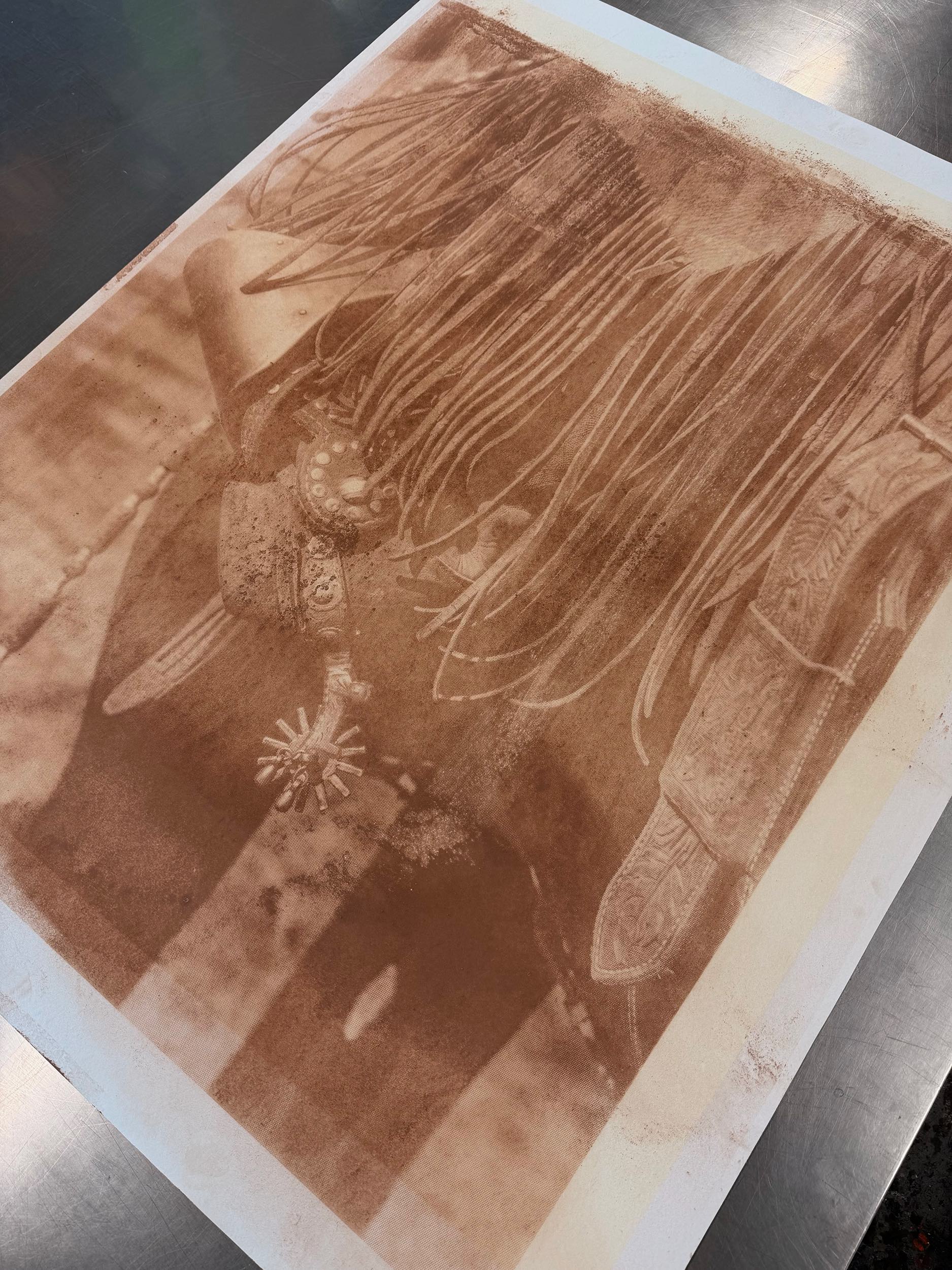
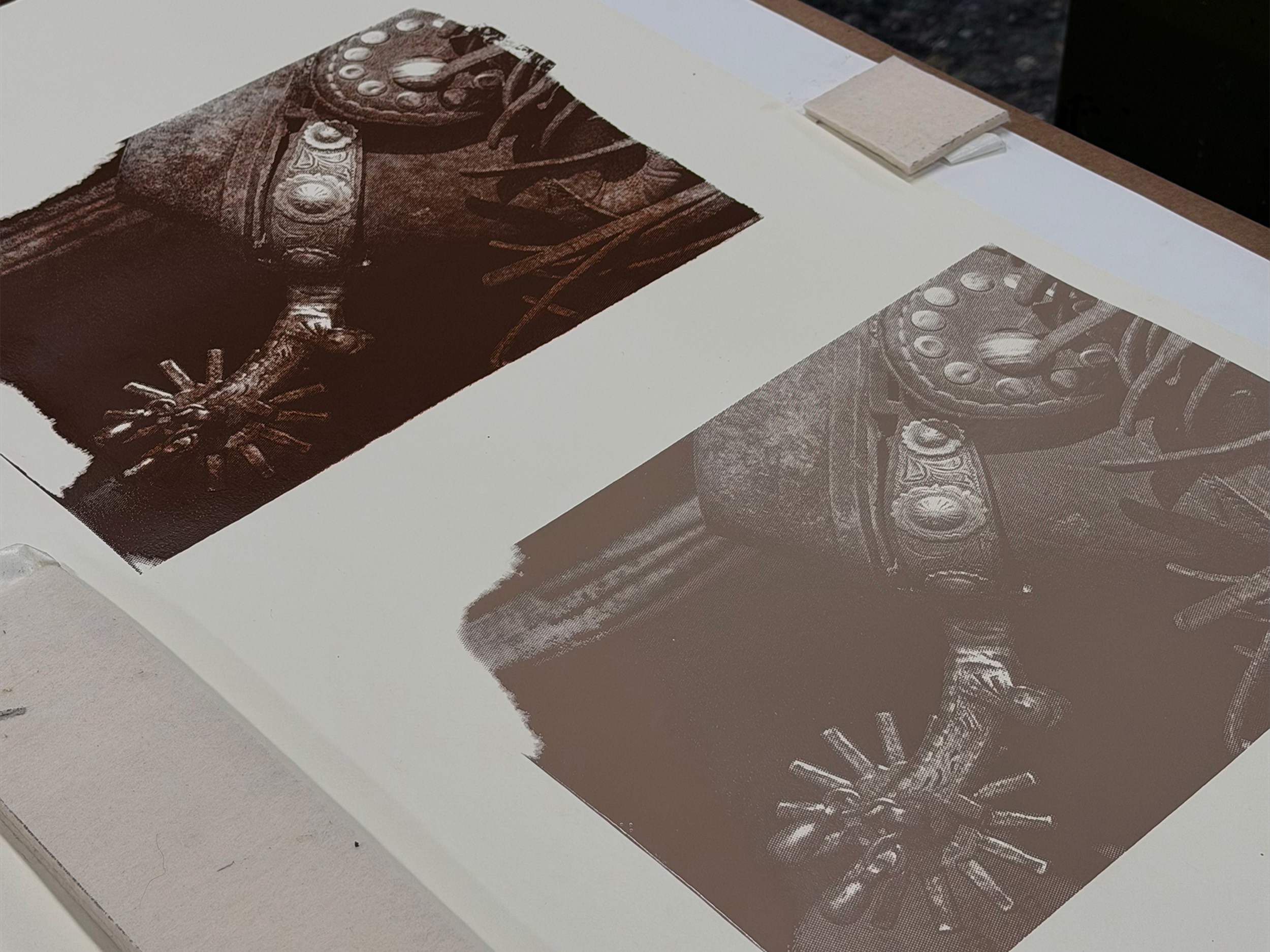
That distinction matters for how the collection should be read. A serigraph, sometimes called a silkscreen print, is a fine art print made by pushing ink through a stencil-covered mesh screen by hand, one layer and one color at a time. It is slower and more physical than photographic reproduction, and it leaves room for exactly the kind of material inclusion Simmons is using here. Coventry Rag, the paper he prints on, is a 100% cotton, acid-free archival sheet built in 1971 specifically for serigraphy and capable of holding fifty or more color layers without losing registration. It is a paper made to carry weight, which is fitting, since each sheet is carrying literal weight from the land it depicts.
Because ranch pigment behaves differently pull to pull, no two prints in an edition are identical. Each "Artifact Collection" work as original within its own edition for that reason. A photograph reproduces exactly. A serigraph built from dust does not, and that variance is the point.
From Archivist to Artist: Why the Material Matters
Simmons has described his photography as an act of documentation, a record of a way of life he has watched change year over year on ranches from Texas to Montana. The "Artifact Collection" reframes that role. Instead of only documenting the West, Simmons is now preserving pieces of it inside the work itself. Call it an evolution from archivist to artist-archivist: the photograph shows you the ranch, the serigraph carries a physical trace of it.
That is also the reason "artifact" is the right word for the series rather than "print." An artifact is an object that carries the memory of where it came from. Simmons is building that memory directly into the paper.
Spotlight: "Hold Tight"
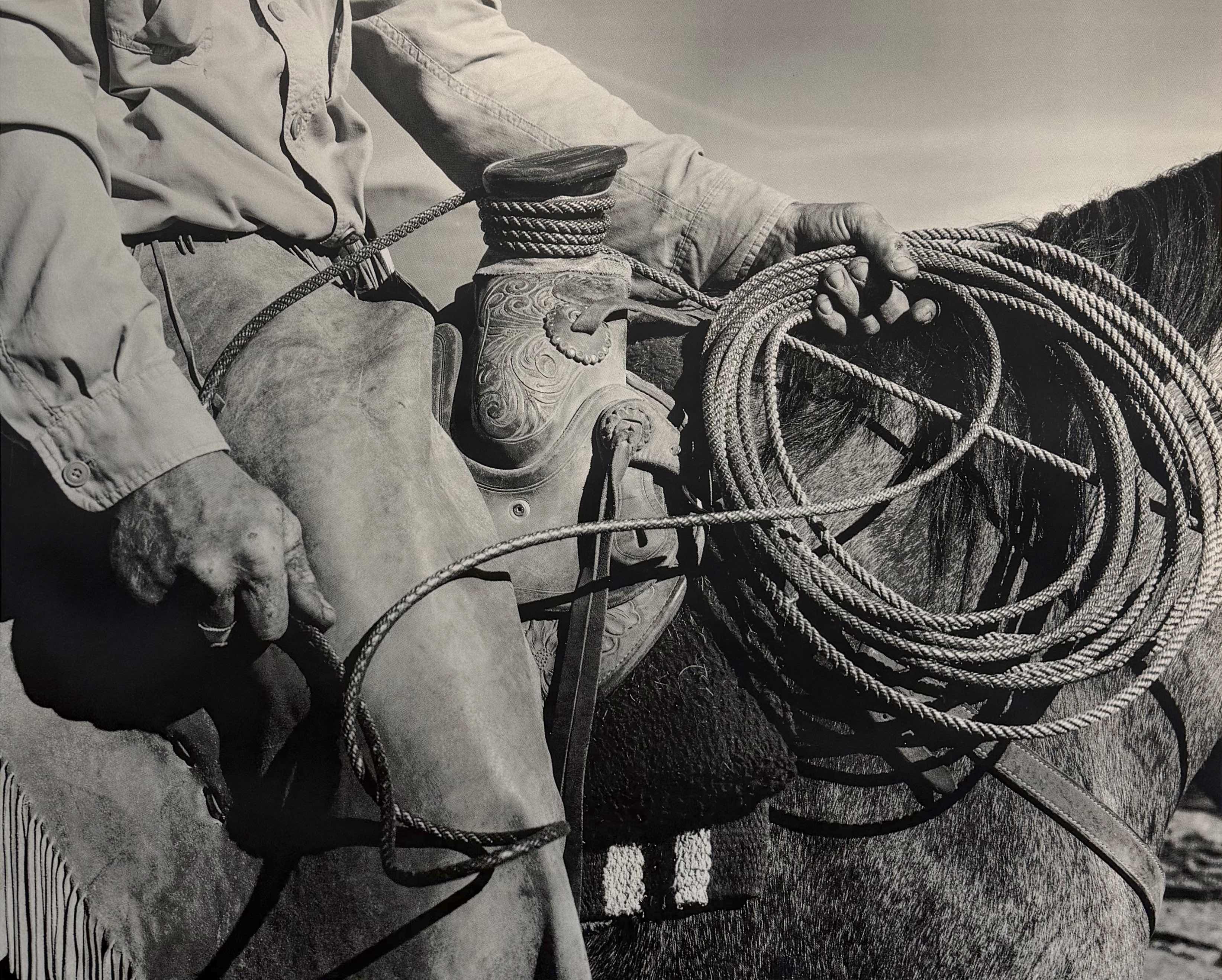
"Hold Tight" is built around the specific, physical vocabulary of ranch work: weathered hands, torn calluses, blistered skin, aged leather. It is less a portrait of a single cowboy than a study of what the work does to a body over years, out past the blacktop and the barbed wire, where the job is measured in sunup-to-sundown hours regardless of season.
The piece leans into the cowboy as a long-running American symbol, one built on strength, humility, perseverance, and integrity, someone who lives in relative solitude, tends animals that graze on land not their own, and holds to a lifestyle that keeps shrinking even as the culture around it keeps romanticizing it. Hold Tight is Simmons' argument that the tradition survives anyway, etched into the country's history whether or not the rest of the culture is paying attention.
Medium: Serigraph, acrylic ink with ranch pigment on Coventry Rag paper, Bone Available sizes: 48" x 60" | 55" x 67" framed Edition: 20 + 2 AP
Spotlight: "The Sound of Steel"
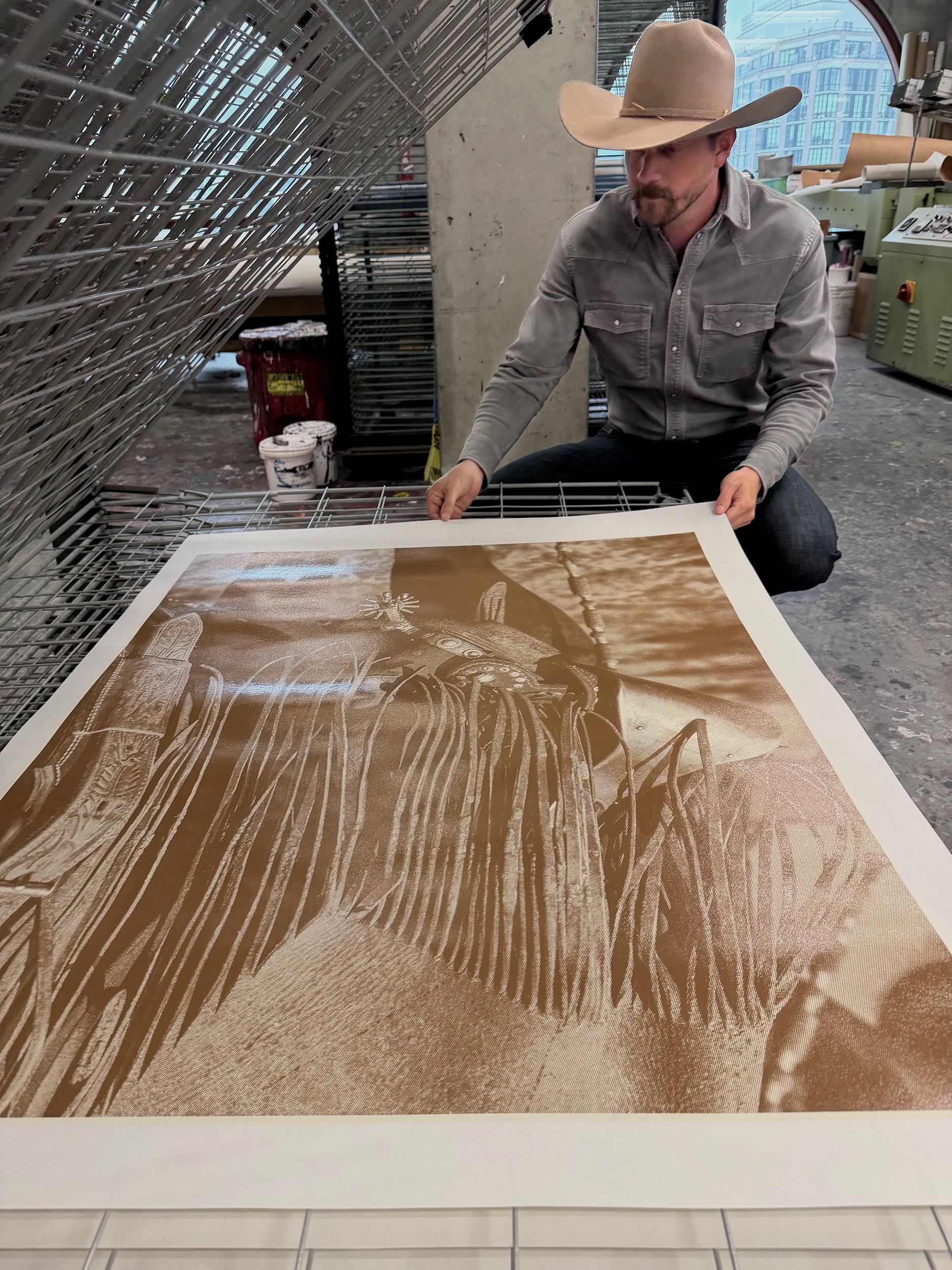
Every working ranch Simmons has photographed shares one detail: mornings start before the sun, in the stillness before cow bellows, calf bawls, hoofbeats, and the ring of a cowboy's spurs break the silence. The Sound of Steel is built around that specific, unglamorous soundtrack rather than the wide-open, cinematic version of the West, the kind of detail Simmons has said interests him more than the postcard shot.

The image was made in Montana, just south of Dillon, one day after Simmons was attacked by a bear six hours east near the Bighorn Canyon. He arrived on set still unable to fully extend his arm, working the camera one-handed to avoid tearing the sutures lining his armpit, trading off between water bottles and half-melted donuts stashed in a pickup to stay upright through an afternoon of branding. The ranch crew gave him a nickname that day. The photograph that resulted is a close study of spurs and sun-blistered leather chinks, the kind of detail only visible to someone who stayed close enough, and stubborn enough, to get it.
Medium: Serigraph, acrylic ink with ranch pigment on Coventry Rag paper, Tobacco Available sizes: 40" x 32" | 47" x 39" framed Edition: 20 + 2 AP
Why the Collection Lands Now
The "Artifact Collection" arrives at a specific cultural moment. The country is mid-Semiquincentennial, its 250th anniversary year, and Western heritage has become one of the more visible threads of that commemoration. Rodeo 250, a live cowboy-heritage exhibition staged on the National Mall, ran through July 10, closing just two days before this piece was written. The cowboy Simmons describes in Hold Tight, a figure of strength, humility, and perseverance, is the same figure America250 programming has been placing at the center of the national story this year.
That timing reflects a broader pattern: the cowboy has functioned as American shorthand for over a century, and a Semiquincentennial year was always going to reach for that symbol. What the "Artifact Collection" offers collectors is a version of that symbol built from something more permanent than sentiment, dust and pigment pulled from the same ranches the culture is currently celebrating in the abstract.
Collecting the Artifact Collection
Both current works are available in two size options, framed at the larger dimension, in editions of 20 plus 2 artist's proofs. Because ranch pigment is hand-applied and varies by pull, collectors buying into the same edition are not buying identical objects, a point worth raising directly with a gallery advisor when comparing available numbers within an edition. The collection sits naturally alongside Simmons' photographic work rather than replacing it: a collector who already owns an Americana Collection photograph gains a material counterpart by adding an Artifact Collection serigraph, image and object from the same body of research.
FAQ
What is Beau Simmons' Artifact Collection? It is a serigraph series that incorporates hand-collected ranch pigment, dust and earth gathered from working ranches across the American West, into acrylic ink printed on archival Coventry Rag paper, extending Simmons' photographic documentation of the West into physical, material artworks.
What is ranch pigment? Ranch pigment refers to natural dust, earth, and pigment that Beau Simmons collects by hand from the landscapes, ranches, and environments he photographs throughout the West, then blends into the acrylic ink used to print each Artifact Collection serigraph.
What is a serigraph? A serigraph is a fine art print made by hand-pulling ink through a stencil-covered mesh screen, one color layer at a time. The term distinguishes gallery-edition, artist-involved screen prints from industrial or commercial screen printing.
Is each print in the Artifact Collection unique? Yes, in effect. Because ranch pigment is hand-applied and behaves differently with each pull, every print carries slightly different characteristics even within the same numbered edition, making each one original despite belonging to a limited edition.
What is Coventry Rag paper? Coventry Rag is a 100% cotton, acid-free, archival paper developed in 1971 specifically for serigraphy and fine art printmaking, valued for its dimensional stability and ability to hold many color layers without losing registration.
How does the Artifact Collection relate to Beau Simmons' photography? His photography documents the American West on medium and large-format film. The Artifact Collection extends that work into printmaking, using pigment sourced directly from the land to give each piece a physical connection to place that photographic reproduction alone cannot carry.
The West, Held in Your Hands
Go back to that corner of "Hold Tight." The ink is ink, but the pigment underneath it came off a fence line or a corral floor somewhere in Montana or Texas, carried home and worked into the paper by hand. Simmons has spent years photographing a way of life that keeps changing under him. The Artifact Collection is his answer to that impermanence: not a picture of the ranch, but a piece of it, pulled by hand onto a sheet built to hold it for generations.
Carousel Fine Art represents Beau Simmons across its gallery locations. Reach out to inquire about current availability within the "Artifact Collection."
