An Elegant Kind of Fear
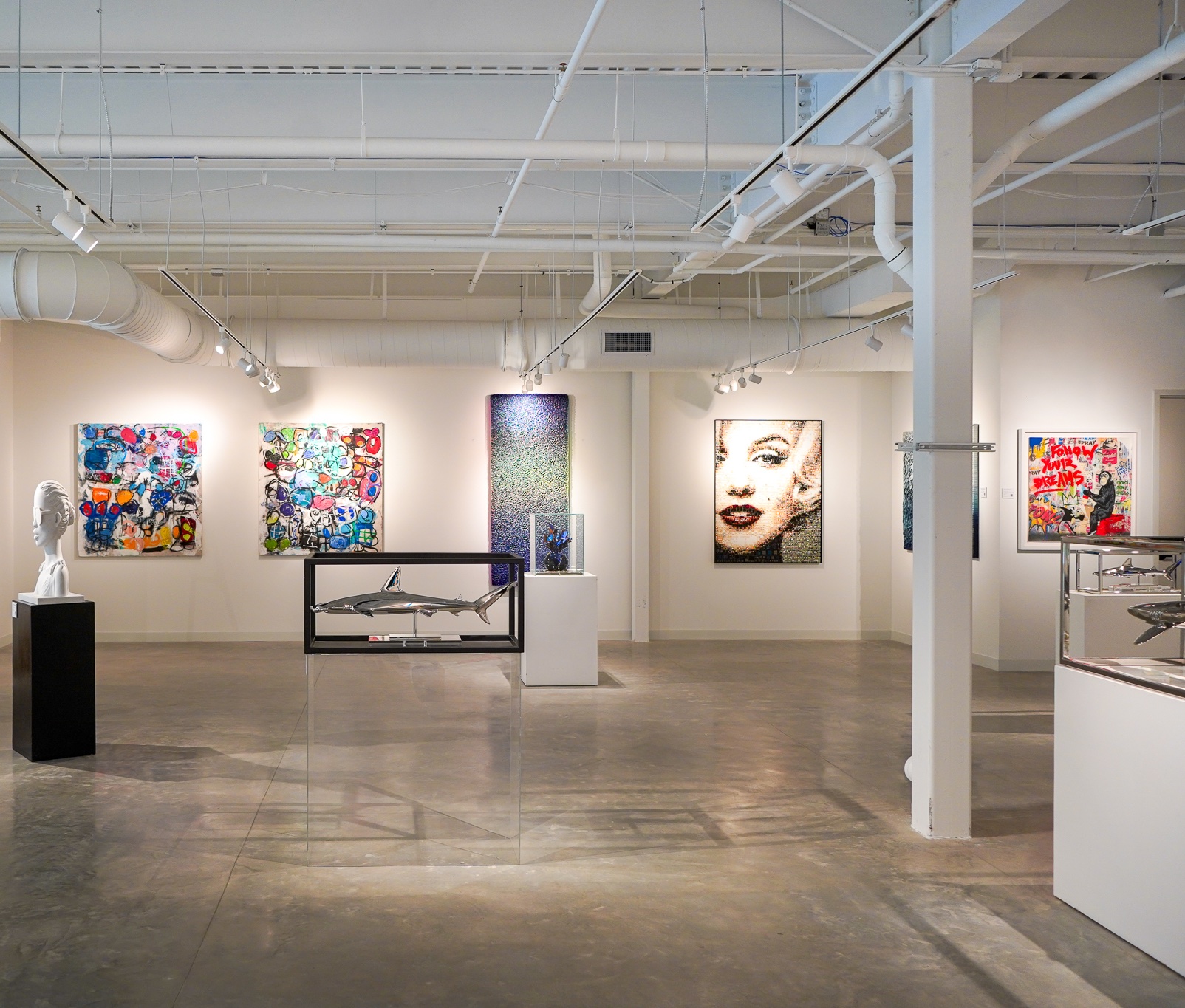
A great hammerhead, rendered in stainless steel, suspended mid-glide with no water in sight. That is the first encounter most people have with Christopher Schulz, whether at a Carousel Fine Art gallery, a corporate lobby, or a design magazine spread. The shark is not aggressive. It is not even fully alive, in the way a painting can pretend to be. It is precise, polished, and still, and that stillness is the entire point.
From California to the Workshop Floor
Schulz was born in California in 1974 and works out of Southern California, where he sculpts, paints, and builds mixed media work with an eye trained less on the art world's usual reference points and more on design, engineering, and the automobile industry. That influence shows. His forms have the surface tension of a car body panel and the structural logic of contemporary architecture, applied to subjects that are anything but industrial: sharks, elephants, and, in his Hybrid series, amalgamated and combined creatures that resist a single classification.
Marine-Grade Steel and the Idea of a "Modern Artifact"
Schulz's chosen materials, marine-grade stainless steel and bronze, are not incidental. They are built to last outdoors, in salt air, in a way that most sculptural media are not, which is part of why his work turns up in public installations from Houston to Taichung, Taiwan. He calls the resulting objects "modern artifacts," pieces meant to endure both physically and conceptually, standing in for the animals and machines they reference long after the moment of making has passed.

That endurance is deliberate. Schulz has said his work lives "at the intersection of luxury and unease, where nature and machine collide in sculptural form," a description that holds for a shark as easily as it does for the firearms and trailers that occasionally surface in his subject matter. The polish is luxury. The subject is the unease. Neither cancels the other out.
The Tiburon Series: Sharks Without the Aquarium
Tiburon, Spanish for shark, is the body of work most collectors associate with Schulz first: great hammerheads, white tips, blacktips, bull sharks, and leopard sharks, each rendered in the same hyper-polished stainless steel, each suspended as if caught mid-motion. Works like "Beast of Burden | Great Hammerhead" (2018) and "White Tip" (2021) exemplify the approach, a technical precision applied to an animal most people only encounter through fear or footage.
Schulz has described the intent behind the series directly: "With this chosen medium, they become an attractor of curiosity, one that brings us closer to our fears by showing these items in an elegant, beautiful way." The sculptures function, in his words, as an alternative to the aquarium, conservation through contemplation rather than captivity. A shark held still in steel asks to be looked at instead of feared, which is a different kind of encounter than a tank ever offers.
The timing of that argument matters. Shark Week returns to Discovery July 26 through August 1, 2026, the single largest annual spike in shark-related search and cultural attention in the U.S. calendar. A collector or designer searching for shark content that week is a natural audience for the Tiburon series, and for a piece that treats the animal as something to be understood rather than sensationalized.
Beyond Sharks: Elephants, Hybrids, and Icons
Sharks are the entry point, not the whole practice. Schulz's Elephant series, including works like "Elephant" (2018) and "Luck Elephant Electric Blue" (2022), applies the same stainless steel precision to a subject associated with weight, memory, and slow movement rather than speed and threat, a deliberate contrast within his own body of work. His Gatray sculptures, produced across multiple editions since at least 2016, extend the hybrid logic further, fusing forms in a way that resists a single species or reference point. Separate bodies of work under the names Icons and Hybrid continue that same amalgamation, alongside an Upholstery series that folds automotive materials directly into the sculptural surface.

Across all of it, the throughline is Schulz's design and engineering eye applied to the natural world, elegant surfaces built around subjects that are rarely elegant on their own terms.
Where the Work Lives
Schulz's exhibition history runs through some of the most visible contemporary art fairs in the country: Scope Miami Beach, Scope New York, Art Palm Beach, Art Wynwood, Art Boca Raton, and the Los Angeles Contemporary Art Fair. Gallery representation extends well past Carousel, including CK Contemporary, George Billis Gallery, and Samuel Owen Gallery in the U.S., and Clarendon Fine Art in the U.K., OA Fine Art in Paris, and Teos Gallery in Monaco internationally.
His collector base includes corporate and institutional clients as well as private ones. Isuzu, Transocean, Kawasaki, and the hospitality design firm HBA Design have all acquired his work, a client list that tracks closely with the industrial and design-forward audience his aesthetic is built for. His public installations span from Houston to Taichung, Taiwan, evidence of a practice built to hold up outdoors and at scale, not just on a collector's shelf.
Carousel Fine Art represents Schulz across its Atlanta and West Palm Beach galleries, with recent programming including a Meet the Artist event at the West Palm Beach location in April 2026. For a designer staging a hospitality lobby or a collector rounding out a sculpture collection, Carousel's art curation and staging services can help place a Schulz piece within a specific room or project.
FAQ
Who is Christopher Schulz? Christopher Schulz is an American sculptor, painter, and mixed media artist born in California in 1974. He is best known for hyper-polished, marine-grade stainless steel and bronze sculptures of sharks, elephants, and hybrid forms, and is represented by Carousel Fine Art in Atlanta and West Palm Beach.
Why does Christopher Schulz sculpt sharks? Schulz has described his shark sculptures as an alternative to the aquarium, meant to bring viewers closer to an animal they typically only encounter through fear, rendered in an elegant, contemplative form rather than captivity. The series is called Tiburon, Spanish for shark.
What materials does Christopher Schulz use? Schulz works primarily in marine-grade stainless steel and bronze, materials durable enough for outdoor public installation, which he refers to as building "modern artifacts" meant to endure physically and conceptually.
Where can I see or buy Christopher Schulz's sculptures? Carousel Fine Art represents Christopher Schulz across its Atlanta and West Palm Beach galleries. His work has also shown at Scope Miami Beach, Art Palm Beach, Art Wynwood, and the Los Angeles Contemporary Art Fair, and through international galleries including Clarendon Fine Art in the U.K. and OA Fine Art in Paris.
Is Christopher Schulz's work in any corporate or public collections? Yes. His sculptures have been acquired by corporate clients including Isuzu, Transocean, Kawasaki, and HBA Design, and his public installations can be found from Houston to Taichung, Taiwan.
Still, but Never Passive
Go back to that hammerhead, suspended in steel, no water in sight. It is not a trophy and it is not a warning. It is an invitation to look at something most people spend their lives avoiding, held still long enough to actually see it. That is the argument Christopher Schulz keeps making, one polished surface at a time.
To view available sculptures by Christopher Schulz or arrange a private viewing at Carousel's Atlanta or West Palm Beach locations, get in touch with the gallery directly.